Introduction
The Masters of the Universe franchise has long held a special place in pop culture history, blending science fiction, fantasy, and heroic storytelling into one of the most recognizable animated properties of the 1980s. With the arrival of a new live-action adaptation, the franchise is once again stepping into the spotlight, aiming to introduce a modern audience to the legendary world of Eternia.
The new film, commonly referred to as Masters of the Universe (Live-Action), is not just a nostalgic reboot—it is a full-scale reimagining designed to bridge generations of fans. At its center is the iconic hero He-Man, whose return is intended to capture both the spirit of the original series and the cinematic expectations of today’s blockbuster audience.
This film represents a major attempt to revive a dormant franchise for a new generation while honoring its legacy. In this review-style breakdown, we explore how the live-action adaptation reintroduces He-Man, what makes this version different, and whether it succeeds as both a nostalgic tribute and a modern fantasy epic.
The Legacy of Masters of the Universe
Before analyzing the new adaptation, it is important to understand the cultural weight behind the franchise. Masters of the Universe originally began as a toy line developed by Mattel before becoming a hit animated series in the 1980s. The story centered around Prince Adam, who transforms into the powerful warrior He-Man to defend the magical land of Eternia from the evil Skeletor.
The original animated series became a defining part of childhood entertainment for many viewers, known for its bold characters, moral lessons, and imaginative world-building. Over time, it developed a cult following that continued through comics, reboots, and merchandise.
Despite its popularity, previous attempts at live-action adaptation struggled to fully capture the essence of the source material. This makes the new film especially significant, as it carries the responsibility of successfully translating a beloved animated universe into a modern cinematic experience.
A Modern Reintroduction of He-Man
At the center of the new film is the reintroduction of He-Man, one of the most iconic heroes in fantasy history. The character, also known as Prince Adam, is traditionally portrayed as a dual identity figure—an ordinary prince who transforms into a superhuman warrior through the power of the Sword of Power.
In the new live-action adaptation, He-Man is being positioned not just as a muscular action hero but as a more emotionally grounded character. This shift reflects modern storytelling trends in fantasy and superhero cinema, where character development is as important as physical strength.
The film reportedly focuses more on Prince Adam’s internal struggle with responsibility, identity, and leadership. Instead of presenting his transformation as a simple power-up moment, the narrative explores what it means to carry the burden of becoming Eternia’s protector.
This approach allows new audiences to connect with the character on a deeper level, while still preserving the heroic essence that defined He-Man for decades.
Building the World of Eternia for Modern Cinema
One of the most important challenges in adapting Masters of the Universe is recreating the world of Eternia in a way that feels both fantastical and believable for modern viewers.
Eternia is a universe filled with castles, mystical energy, futuristic technology, and magical creatures. In the original animated series, these elements were stylized and exaggerated, reflecting the visual limitations and artistic choices of the time.
The live-action adaptation aims to elevate this world using modern visual effects and cinematic world-building techniques. Early expectations suggest a more detailed and immersive version of Eternia, with realistic environments that still retain the fantasy aesthetic.
This balance between realism and fantasy is critical. Too much realism could strip away the charm of the franchise, while too much fantasy could make it difficult for modern audiences to connect. The film’s success depends heavily on how well it navigates this visual and tonal balance.
He-Man vs Skeletor: The Core Conflict
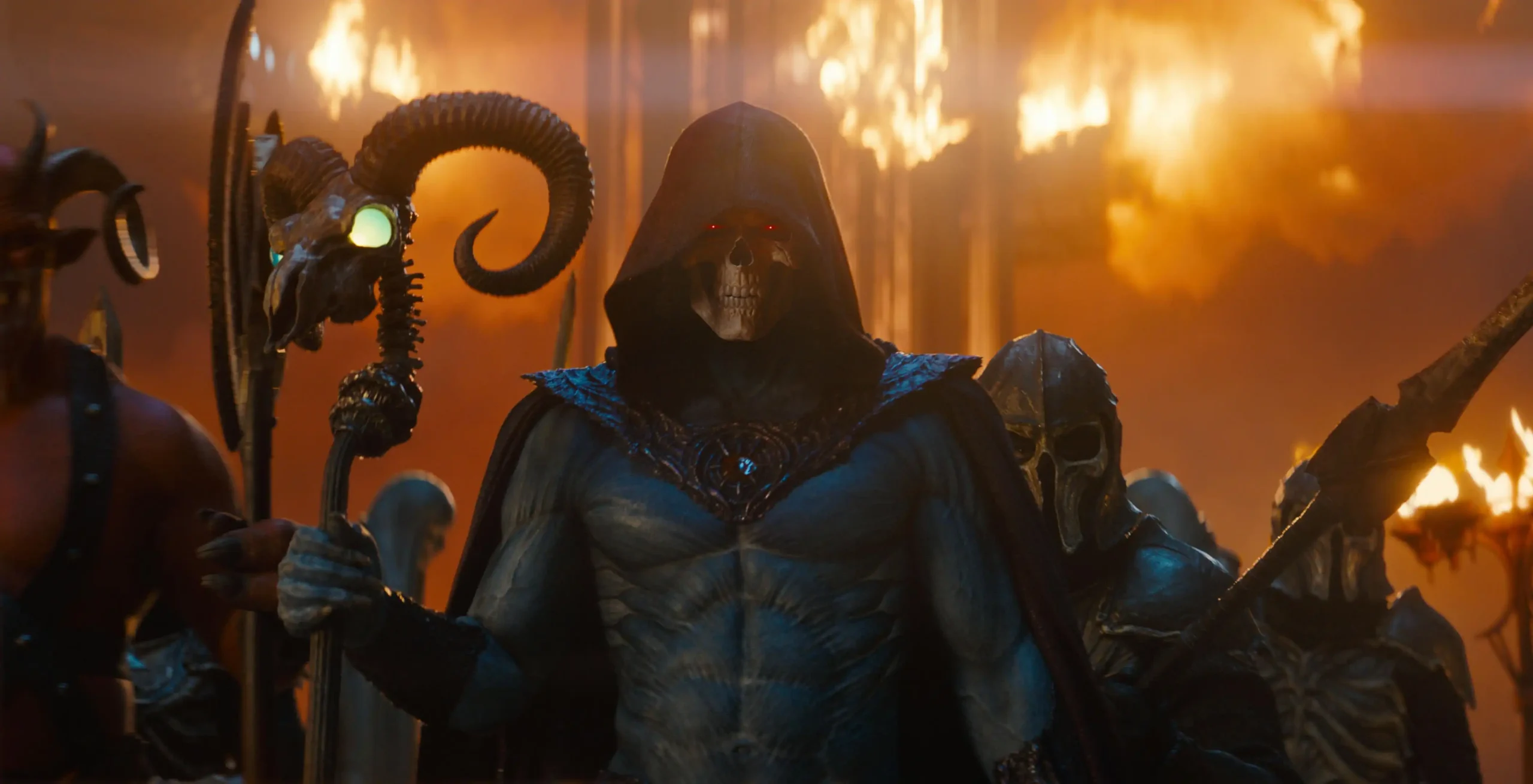
No Masters of the Universe adaptation would be complete without the legendary conflict between He-Man and Skeletor. As the primary antagonist, Skeletor represents chaos, ambition, and dark magic, serving as the ultimate counterforce to He-Man’s heroic strength.
The new film is expected to reframe this rivalry with greater depth, exploring not just their physical battles but also their ideological differences. Rather than being a one-dimensional villain, Skeletor is likely to be portrayed with more complexity, potentially giving audiences insight into his motivations and origins.
This modern approach to storytelling reflects a broader trend in fantasy and superhero films, where villains are given richer backstories and emotional depth. This enhances the overall narrative tension and raises the stakes of their conflict.
The dynamic between He-Man and Skeletor remains the emotional and narrative core of the franchise, and its successful execution is essential for the film’s impact.
A Franchise Built on Nostalgia and Reinvention
One of the strongest elements driving interest in the live-action Masters of the Universe is nostalgia. Many viewers grew up with the original animated series or have at least been exposed to its cultural legacy through memes, merchandise, and pop culture references.
However, nostalgia alone is not enough to sustain a modern blockbuster. The film must also offer something new, both visually and narratively, to engage younger audiences who may not have any prior connection to the franchise.
This dual responsibility—honoring the past while reinventing the future—is one of the most difficult challenges in modern Hollywood reboots. The film must satisfy long-time fans while also standing on its own as an accessible fantasy epic.
The decision to modernize character arcs, enhance world-building, and deepen emotional storytelling suggests that the filmmakers are aiming for a balanced approach rather than a purely nostalgic recreation.
Visual Style and Action Expectations
As a live-action fantasy adaptation, Masters of the Universe is expected to feature large-scale action sequences, magical battles, and visually striking set pieces.
He-Man’s sword-based combat, superhuman strength, and iconic transformations are central to the action design. Modern CGI technology allows these elements to be portrayed with greater realism and intensity than ever before.
At the same time, the film is expected to retain a sense of colorful fantasy rather than shifting into overly dark or grounded territory. The original franchise was known for its vibrant visual identity, and preserving that aesthetic will be important for maintaining its unique identity.
If executed well, the action sequences could become one of the film’s biggest strengths, combining nostalgic imagery with modern cinematic scale.
Casting and Character Interpretation
While specific casting details may vary depending on production updates, the success of the film will heavily depend on how the characters are interpreted on screen.
He-Man must strike a balance between physical presence and emotional relatability. Skeletor must feel threatening without becoming cartoonish. Supporting characters from Eternia must feel meaningful rather than purely decorative.
Modern audiences expect more layered performances even in fantasy settings, which means character development will play a major role in determining the film’s reception.
The reinterpretation of familiar characters is also an opportunity to expand the franchise’s appeal. By giving each character more depth, the film can transform Masters of the Universe from a nostalgic property into a fully realized cinematic universe.
Challenges Facing the Live-Action Adaptation
Despite its potential, the film faces several challenges.
The first is audience expectation. Fans of the original series have strong emotional attachments to the characters and world, and any deviation from the source material may lead to criticism.
The second challenge is tonal balance. The franchise is inherently fantastical, but modern blockbuster audiences often expect emotional realism and narrative complexity. Finding the right tone between fun adventure and serious storytelling is crucial.
The third challenge is franchise positioning. If the film is intended to launch a larger universe, it must successfully establish its world, characters, and mythology in a single installment.
Many fantasy reboots struggle with these pressures, making execution the key factor in determining success.
Why Masters of the Universe Still Matters Today
Despite being a franchise rooted in the 1980s, Masters of the Universe continues to resonate with audiences because its core themes remain timeless.
At its heart, the story is about responsibility, identity, and the battle between good and evil. These universal themes allow it to be reinterpreted across generations.
He-Man represents the idea that ordinary individuals can rise to extraordinary challenges, a concept that remains relevant in modern storytelling. The world of Eternia also provides an escape into pure fantasy, something that continues to attract audiences in an increasingly digital and reality-driven entertainment landscape.
Conclusion
Masters of the Universe Returns: How the Live-Action Film Reintroduces He-Man to a New Generation is more than just a nostalgic reboot—it is a modern reinvention of a classic fantasy franchise.
By reimagining He-Man as a more emotionally grounded hero and expanding the world of Eternia with modern cinematic techniques, the film aims to bridge the gap between longtime fans and new audiences.
The success of the adaptation will depend on its ability to balance nostalgia with innovation, spectacle with storytelling, and fantasy with emotional depth.
If executed effectively, Masters of the Universe has the potential to reestablish itself as one of the defining fantasy franchises of a new cinematic era—proving that legends like He-Man never truly fade, they simply evolve for a new generation.