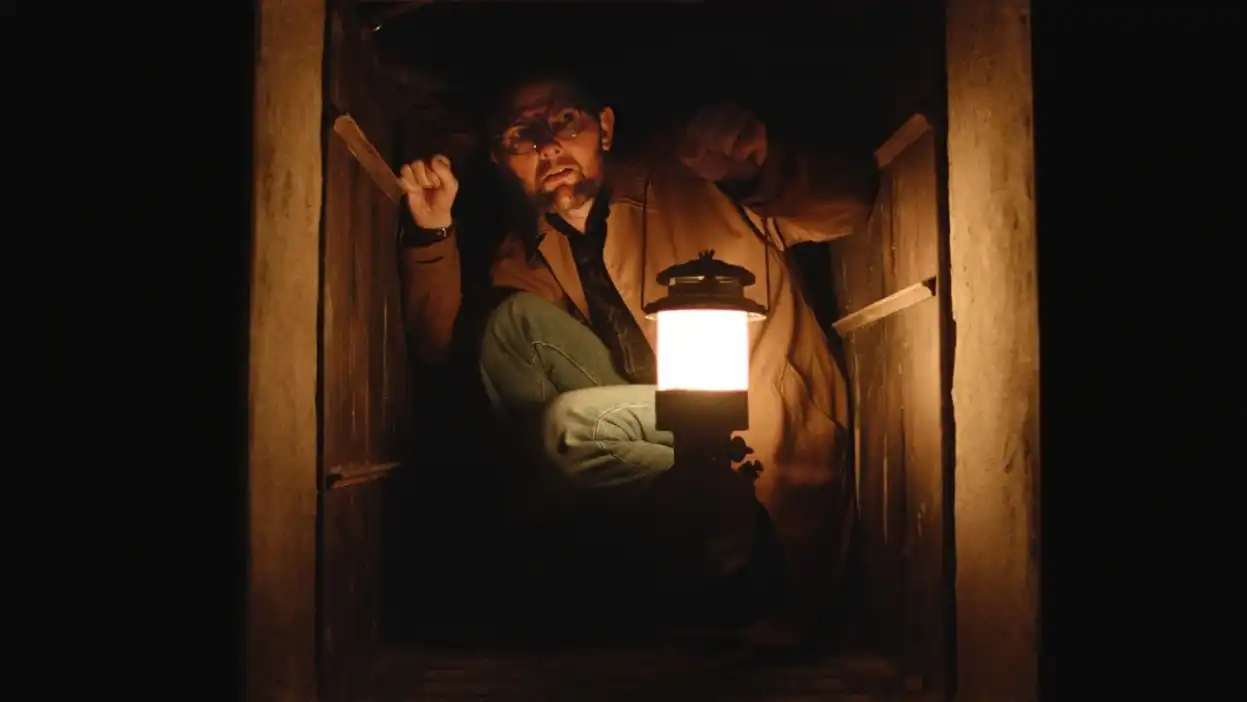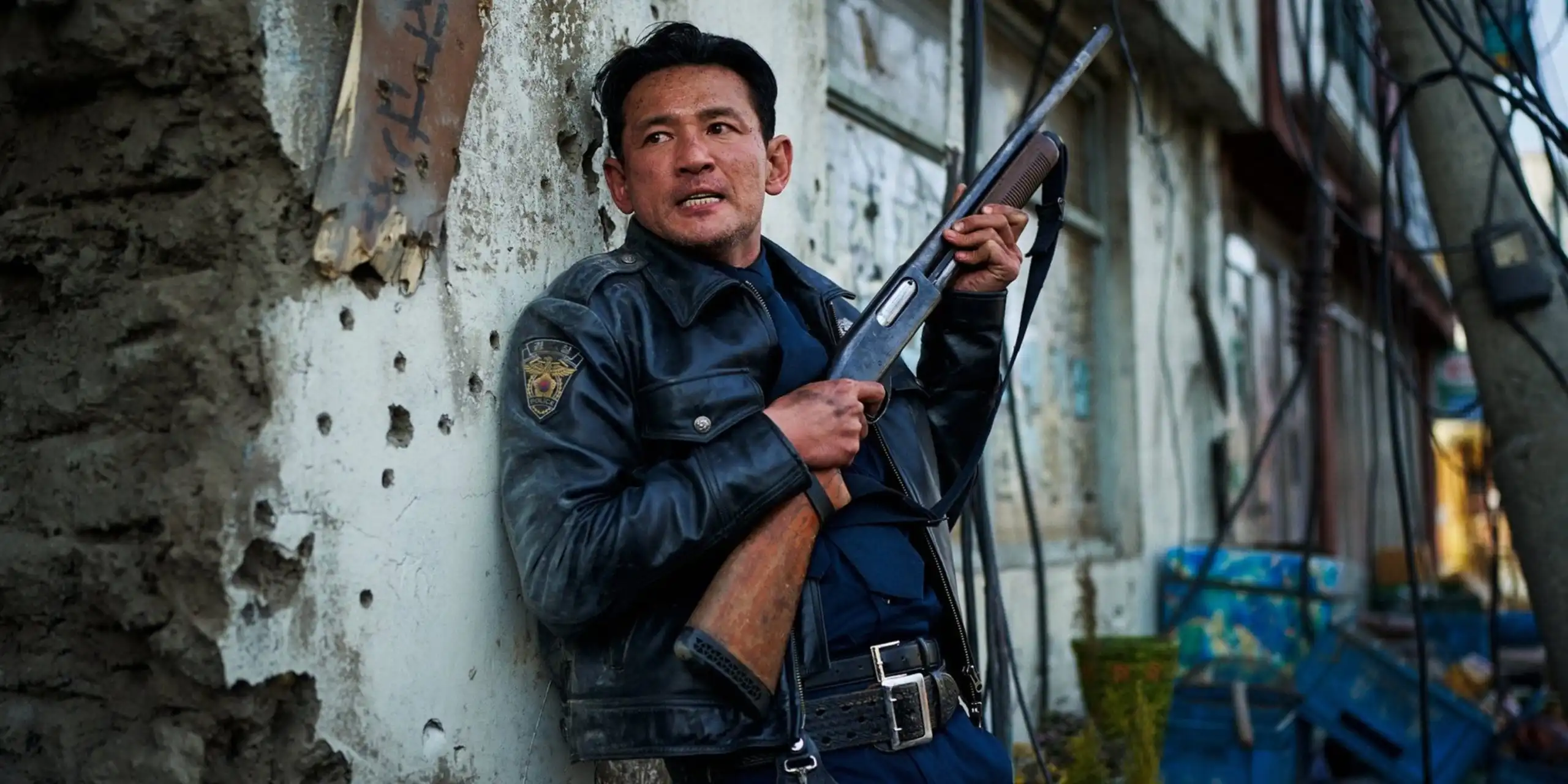
Few directors working today carry the same reputation for tension, atmosphere, and psychological intensity as Na Hong-jin. Known for critically acclaimed works such as The Chaser and The Wailing, he has built a career on crafting deeply unsettling narratives that blend crime, horror, and spiritual dread with precision.
That is exactly why expectations were so high for Hope, his long-awaited return to large-scale creature filmmaking. Positioned as a blockbuster-level horror spectacle, the film promised an ambitious fusion of emotional storytelling, mythological horror, and cutting-edge visual effects. Instead, it has become one of the most divisive releases of the year—praised for its ambition but heavily criticized for its execution.
This review takes a deep dive into why Hope ultimately struggles to live up to its potential, focusing on its inconsistent script, tonal imbalance, and widely criticized CGI execution that many viewers have compared to early-era visual effects shortcomings.
A Promising Concept Undermined by Execution
At its core, Hope is built on a compelling premise: a mysterious creature emerges in a modern urban environment, forcing characters to confront fear, grief, and survival in the face of the unknown. On paper, this aligns perfectly with the strengths of Na Hong-jin, whose films often explore human fragility under extreme psychological pressure.
The idea of combining emotional drama with large-scale creature horror had strong potential. The marketing positioned Hope as a genre-defining blockbuster that would elevate creature features into serious cinematic territory.
However, while the concept is strong, the execution reveals significant structural weaknesses that prevent the film from reaching its intended impact.
A Script That Undercuts Its Own Potential
The most widely criticized element of Hope is its screenplay. Despite its ambitious narrative scope, the script struggles with uneven pacing, inconsistent character development, and underdeveloped emotional arcs.
Rather than building tension gradually, the story frequently shifts between tonal extremes without sufficient narrative transition. Emotional scenes often feel disconnected from the larger plot, making it difficult for audiences to fully invest in character motivations.
This is particularly surprising given Na Hong-jin’s reputation for tightly constructed narratives. In his earlier works, even chaotic or supernatural elements were grounded in strong character logic. In Hope, however, key emotional decisions feel rushed or insufficiently justified.
The dialogue also contributes to the film’s uneven tone. At times, it attempts philosophical depth but veers into exposition-heavy exchanges that slow down pacing rather than enhance thematic resonance.
Character Development That Never Fully Lands
One of the most noticeable shortcomings in Hope is its handling of character arcs. While the film introduces a wide range of personalities—scientists, survivors, government officials, and witnesses—few are given enough narrative space to feel fully realized.
Instead of evolving organically, characters often serve functional roles within the plot. This limits emotional engagement, especially in moments designed to carry dramatic weight.
The result is a film where the stakes are visually clear but emotionally muted. Viewers understand the danger, but struggle to connect with the people experiencing it.
For a director known for psychological depth, this represents a significant departure from his usual storytelling strength.
Visual Ambition vs. CGI Execution
Perhaps the most debated aspect of Hope is its visual effects. As a creature feature, the film relies heavily on CGI to bring its central entity to life. Unfortunately, this is where many critics and audiences have expressed disappointment.
While some sequences demonstrate strong conceptual design and atmospheric lighting, the overall CGI execution is inconsistent. In several key scenes, the creature effects appear unfinished or poorly integrated into live-action environments.
This has led to widespread comparisons to early 2000s blockbuster visual effects, with some viewers referencing films like The Mummy Returns as a point of comparison for outdated digital realism.
The issue is not necessarily the creature design itself, which is conceptually intriguing, but rather its rendering, movement, and interaction with physical space. These inconsistencies break immersion and reduce the impact of otherwise tense sequences.
Atmosphere and Direction Still Show Strength
Despite its flaws, Hope is not without merit. One of the strongest aspects of the film is its atmospheric direction, which reflects the signature style of Na Hong-jin.
The film frequently uses shadow, silence, and environmental tension to build unease. Certain sequences effectively capture the feeling of isolation and unpredictability that defined his earlier work.
Cinematography also plays a key role in maintaining visual interest, particularly in wide landscape shots and urban destruction sequences. These moments demonstrate that the director’s core visual instincts remain intact, even when the script and CGI struggle to support them.
Tonal Inconsistency Weakens Impact
One of the major structural issues in Hope is its tonal inconsistency. The film shifts between horror, emotional drama, action spectacle, and philosophical reflection without always maintaining cohesion.
While genre blending can be effective when handled carefully, Hope often struggles to balance its different tones. Intense emotional scenes are sometimes followed too quickly by large-scale action sequences, reducing the impact of both.
This inconsistency prevents the film from fully committing to its strongest identity. Is it a creature horror film? A psychological drama? A social commentary? The answer appears to be all of the above, but not always in a unified way.
Audience Expectations vs. Final Product
Part of the disappointment surrounding Hope comes from the extremely high expectations attached to the project. With Na Hong-jin at the helm, audiences anticipated a tightly crafted, emotionally powerful, and visually groundbreaking film.
Instead, the final product feels uneven—ambitious in scope but inconsistent in execution. This gap between expectation and reality has amplified critical response, making its shortcomings more visible in public discourse.
In many cases, the discussion around Hope has focused less on what works and more on what could have been achieved with stronger narrative and technical alignment.
Is Hope a Complete Failure?
Despite its criticism, calling Hope a complete failure would be overly simplistic. The film still contains moments of strong direction, intriguing thematic ideas, and visually impressive sequences.
What holds it back is not lack of ambition, but lack of cohesion. The foundation of the film is strong, but its execution fails to unify its elements into a consistently compelling experience.
For viewers familiar with Na Hong-jin’s earlier work, Hope feels more like a bold experiment than a refined statement.
Final Verdict
Hope is one of the most polarizing creature features in recent years. It combines a powerful concept and a respected director with uneven execution, resulting in a film that is both fascinating and frustrating.
While its atmosphere and ambition deserve recognition, its weak script and inconsistent CGI significantly limit its overall impact. For many viewers, it stands as a reminder that even the most visionary filmmakers can struggle when scale outweighs structural coherence.
In the end, Hope is not without value—but it is far from the breakthrough blockbuster it was expected to be.