Introduction: A New Benchmark for Psychological Horror
The 2026 thriller Hokum arrives as one of the most talked-about horror films of the year, not only for its eerie storytelling but also for its layered psychological depth. Directed by Irish filmmaker Damian McCarthy, the film continues his reputation for atmospheric horror, following earlier works like Caveat and Oddity.
Starring Adam Scott in a gripping lead performance, Hokum blends supernatural folklore, psychological trauma, and mystery into a tightly constructed narrative that challenges both genre expectations and audience perception.
Set in a remote Irish hotel haunted by rumors of a witch and unexplained disappearances, the film explores grief, memory, and the unreliable nature of reality itself. What makes Hokum stand out is not just its scares, but its emotional intelligence and ambiguity.
This review breaks down the film’s story, themes, performances, direction, cinematography, and overall impact on the modern thriller genre.
Plot Overview: A Haunted Hotel with Hidden Truths
At the center of Hokum is Ohm Bauman, a successful yet emotionally fractured horror novelist played by Adam Scott. Struggling with writer’s block and unresolved trauma tied to his parents’ death, he travels to a secluded hotel in rural Ireland to scatter their ashes.
The hotel, however, is far from ordinary.
Rumors circulate among the staff about a sealed honeymoon suite, said to contain the spirit of a witch bound within the walls. Strange disappearances begin occurring shortly after Ohm’s arrival, and the protagonist finds himself caught between rational skepticism and growing paranoia.
As the narrative unfolds, Hokum blurs the line between:
- Supernatural horror
- Psychological breakdown
- Drug-induced hallucination
- Emotional grief response
By the final act, the audience is left questioning what was real and what existed only inside Ohm’s mind.
Direction and Atmosphere: Damian McCarthy’s Signature Horror Style
Director Damian McCarthy continues to refine his unique brand of horror storytelling in Hokum. Known for creating tension through silence, framing, and negative space, McCarthy avoids relying on constant action or gore.
Instead, he builds unease through:
- Long, quiet hallway shots
- Subtle background movement
- Unsettling sound design
- Slow narrative reveals
- Sudden, well-timed jump scares
Critics have noted that McCarthy’s direction turns ordinary spaces into psychological traps, where even a simple hotel corridor feels threatening.
What makes Hokum effective is its patience. The film does not rush to explain its mysteries. Instead, it lets tension accumulate until the viewer is emotionally overwhelmed.
Performance Analysis: Adam Scott’s Career-Defining Role
Adam Scott delivers one of his strongest performances to date as Ohm Bauman, a character defined by cynicism, grief, and emotional repression.
What makes his performance remarkable is the balance between:
- Detached sarcasm
- Emotional vulnerability
- Gradual psychological unraveling
Scott plays Ohm not as a traditional horror protagonist, but as a man slowly losing control of his perception of reality.
His performance grounds the film’s more supernatural elements, making even the most surreal moments feel emotionally believable.
Supporting cast members also strengthen the film’s realism, particularly the hotel staff, who feel like fully realized individuals rather than disposable horror archetypes.
Themes: Grief, Memory, and Psychological Decay
At its core, Hokum is less about ghosts and more about emotional trauma.
1. Grief as a Haunting Force
Ohm’s journey is driven by unresolved grief over his parents’ death. The haunted hotel becomes a physical representation of his emotional state.
2. The Unreliable Mind
The film heavily suggests that Ohm’s perception cannot be trusted. Hallucinations, memory gaps, and distorted experiences blur reality.
3. Guilt and Self-Destruction
Underlying the narrative is the idea that emotional guilt can manifest into self-destructive behavior, leading Ohm deeper into psychological collapse.
4. Folklore as Metaphor
The witch mythology in the film can be interpreted as a symbolic manifestation of trauma rather than a literal supernatural entity.
These layered themes elevate Hokum beyond standard horror storytelling.
Cinematography and Visual Language
Visually, Hokum is one of the most atmospheric films of 2026.
The cinematography uses:
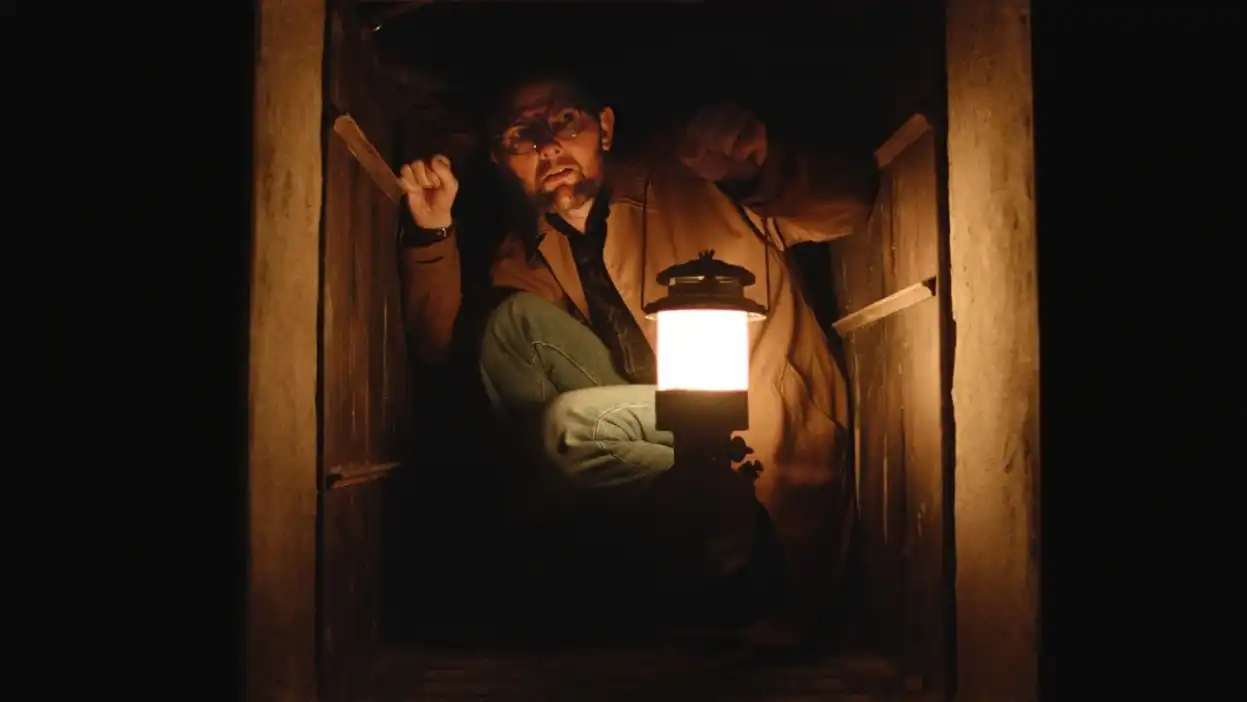
- Dim lighting and shadow-heavy interiors
- Long static shots that build suspense
- Tight framing to create claustrophobia
- Natural landscapes that feel isolating and cold
The Irish setting plays a crucial role, with fog-covered fields and old architecture reinforcing the film’s sense of timeless dread.
Rather than relying on flashy visuals, the film builds fear through restraint. Every frame feels intentional, and every silence feels loaded with meaning.
Sound Design: The Invisible Source of Fear
One of the most effective aspects of Hokum is its sound design.
The film uses:
- Distant whispers
- Creaking wood
- Sudden silence before scares
- Subtle ambient noise shifts
These elements create constant psychological tension, even in scenes where nothing visibly happens.
The sound design is not just atmospheric—it is narrative. It guides the viewer’s emotional response and often signals when reality begins to distort.
Horror Elements: Jump Scares vs Psychological Dread
Unlike many modern horror films, Hokum does not rely solely on jump scares. Instead, it blends:
- Carefully timed jump scares
- Slow-building psychological dread
- Ambiguous supernatural hints
While some viewers may find the scares familiar, their execution is generally praised for being earned rather than random.
However, the film’s strongest horror element is not shock—it is uncertainty.
The audience is constantly forced to ask:
- Is this real?
- Is Ohm hallucinating?
- Or is something truly supernatural occurring?
This ambiguity is what makes the film unsettling long after it ends.
Narrative Structure: Strengths and Weaknesses
Hokum is ambitious in structure, but not without flaws.
Strengths:
- Tight pacing in the first two acts
- Strong character-driven storytelling
- Gradual escalation of tension
Weaknesses:
- Some plot threads feel underdeveloped
- The supernatural rules remain intentionally unclear
- Certain supporting characters lack depth
Still, these weaknesses are arguably intentional, reinforcing the film’s theme of confusion and psychological instability.
Critical Reception and Audience Response
Early critical reception has been largely positive, with many reviewers praising the film’s intelligence and atmosphere.
The film has been described as:
- A “smartly contained horror experience”
- A “tense and atmospheric ghost story”
- A “masterclass in suspense and dread”
However, audience reactions are more divided. Some viewers appreciate its ambiguity and slow-burn storytelling, while others criticize it for being overly abstract or emotionally distant.
Symbolism and Deeper Interpretation
One of the most discussed aspects of Hokum is its symbolic layer.
Many interpretations suggest that:
- The hotel represents the mind
- The witch symbolizes unresolved trauma
- The missing characters represent repressed memories
- The haunted events may be drug-induced hallucinations or grief manifestations
This multi-layered storytelling invites rewatchability, as viewers often discover new details on second viewing.
Final Verdict: Is Hokum Worth Watching?
Hokum is not a conventional horror film. It is slow, introspective, and deliberately ambiguous. However, it is also one of the most intellectually engaging thrillers of 2026.
For viewers who enjoy:
- Psychological horror
- Atmospheric storytelling
- Slow-burn tension
- Symbolic narratives
This film delivers a highly rewarding experience.
However, for audiences expecting straightforward horror or constant action, Hokum may feel restrained.
Conclusion: A Modern Horror Film That Prioritizes Mind Over Monsters
In the evolving landscape of psychological thrillers, Hokum stands out as a film that prioritizes emotional depth over spectacle. Through its haunting atmosphere, layered storytelling, and standout performance from Adam Scott, it redefines what modern horror can achieve.
Ultimately, Hokum is not just about fear—it is about memory, grief, and the fragile boundaries of the human mind.
It is a film that lingers long after the credits roll, not because of what it shows, but because of what it refuses to fully explain.