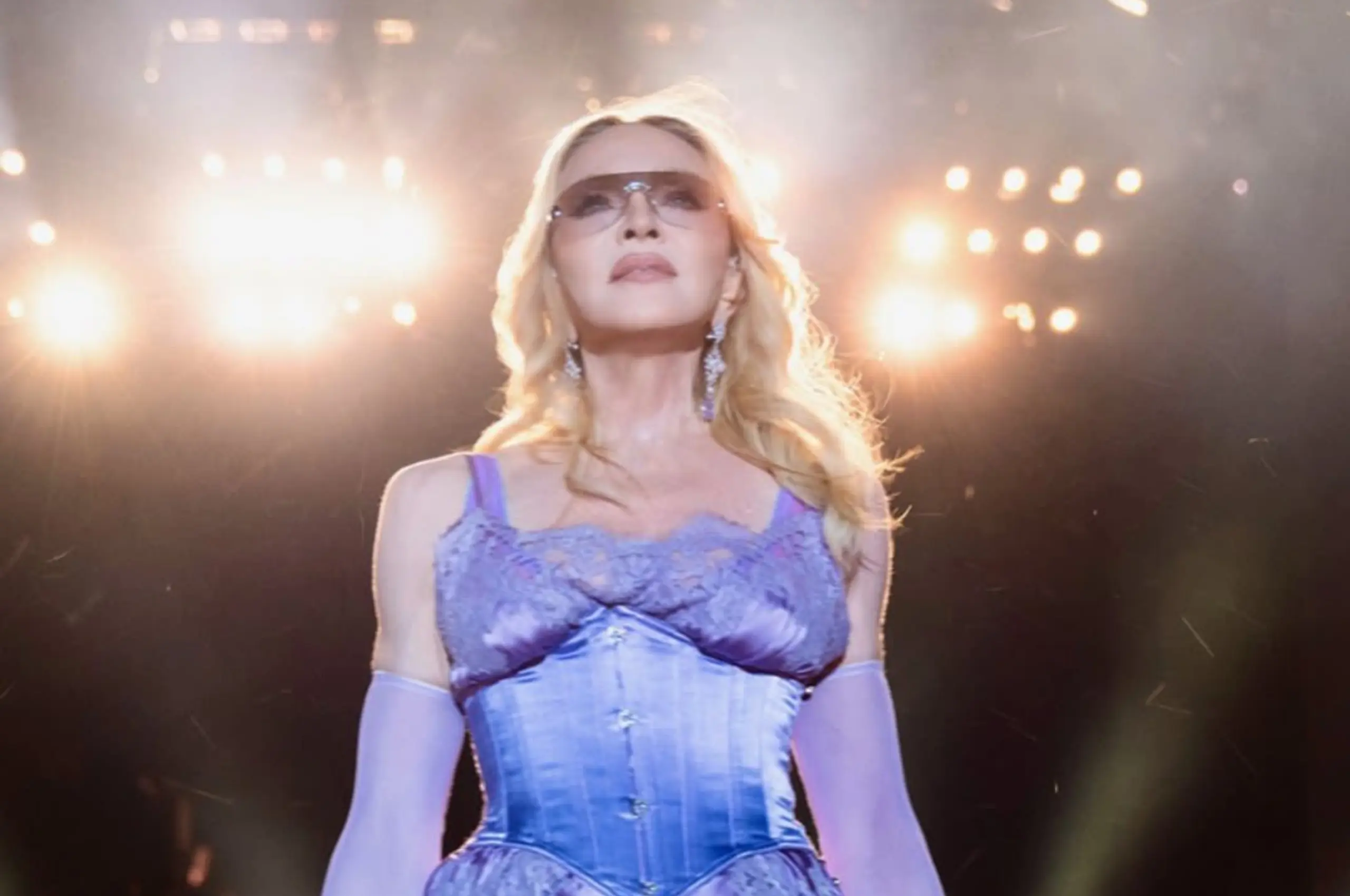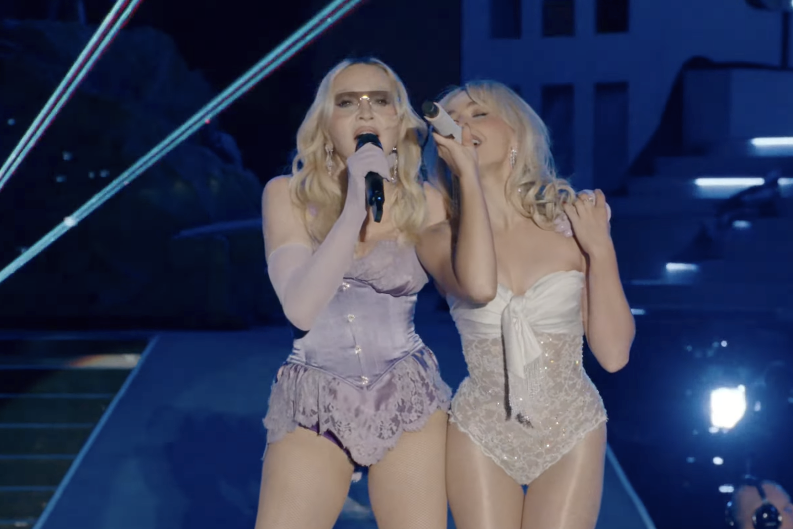
The moment Madonna appeared during Sabrina Carpenter’s set at the Coachella Valley Music and Arts Festival, it wasn’t just a nostalgic callback—it was a carefully layered cultural event. In 2026, surprise performances are no longer just spontaneous entertainment moments. They are hybrid experiences that blend nostalgia, marketing strategy, and real-time audience activation.
What made this particular appearance stand out was its dual function. On the surface, it delivered emotional impact: a legacy artist returning to a festival stage in a way that immediately triggered memory, history, and generational recognition. But beneath that surface, it also functioned as a strategic rollout mechanism. New music was previewed live, transforming the performance into a controlled environment for maximum exposure and immediate global amplification.
This is the modern logic of surprise appearances: they compress multiple industry goals into a single moment. Instead of separating nostalgia-driven engagement from promotional campaigns, both are merged into one high-impact event. The audience experiences it as spontaneous, but structurally, it is designed to travel across platforms instantly, generating clips, reactions, analysis, and replay value within minutes.
The internet rewards this kind of density. A standard release cycle—announcement, teaser, drop, promotion—has been replaced in many cases by condensed cultural spikes. A surprise performance delivers emotional resonance, exclusivity, and novelty all at once. It creates the kind of moment that algorithms amplify because it generates immediate conversation across different audience groups: longtime fans, casual viewers, and digital commentators.
For artists, the advantage is control over framing. When new music is introduced inside a live, high-profile moment, it arrives already embedded in context. It is not just a song—it is part of an experience. That framing increases retention, replay interest, and social sharing. Instead of competing for attention in isolation, the music enters the ecosystem already attached to a cultural event.
This strategy also reflects how live performance has evolved. Concerts and festival sets are no longer just about setlists; they are about narrative structure. A surprise guest, an unexpected collaboration, or a first-time performance of unreleased material turns a set into a multi-layered media event. The audience isn’t just attending—they’re witnessing something designed to be redistributed.
In Madonna’s case, the nostalgia factor adds another layer of amplification. Legacy artists bring historical weight into present-day moments, which deepens engagement across demographics. Older audiences connect through memory, while younger audiences engage through discovery. That overlap creates a broader, more sustained conversation than a typical release could generate alone.
Ultimately, surprise performances still win the internet because they solve a core problem of modern attention: fragmentation. They concentrate emotion, strategy, and novelty into a single, shareable moment. In doing so, they don’t just create buzz—they reset the timeline of conversation itself.