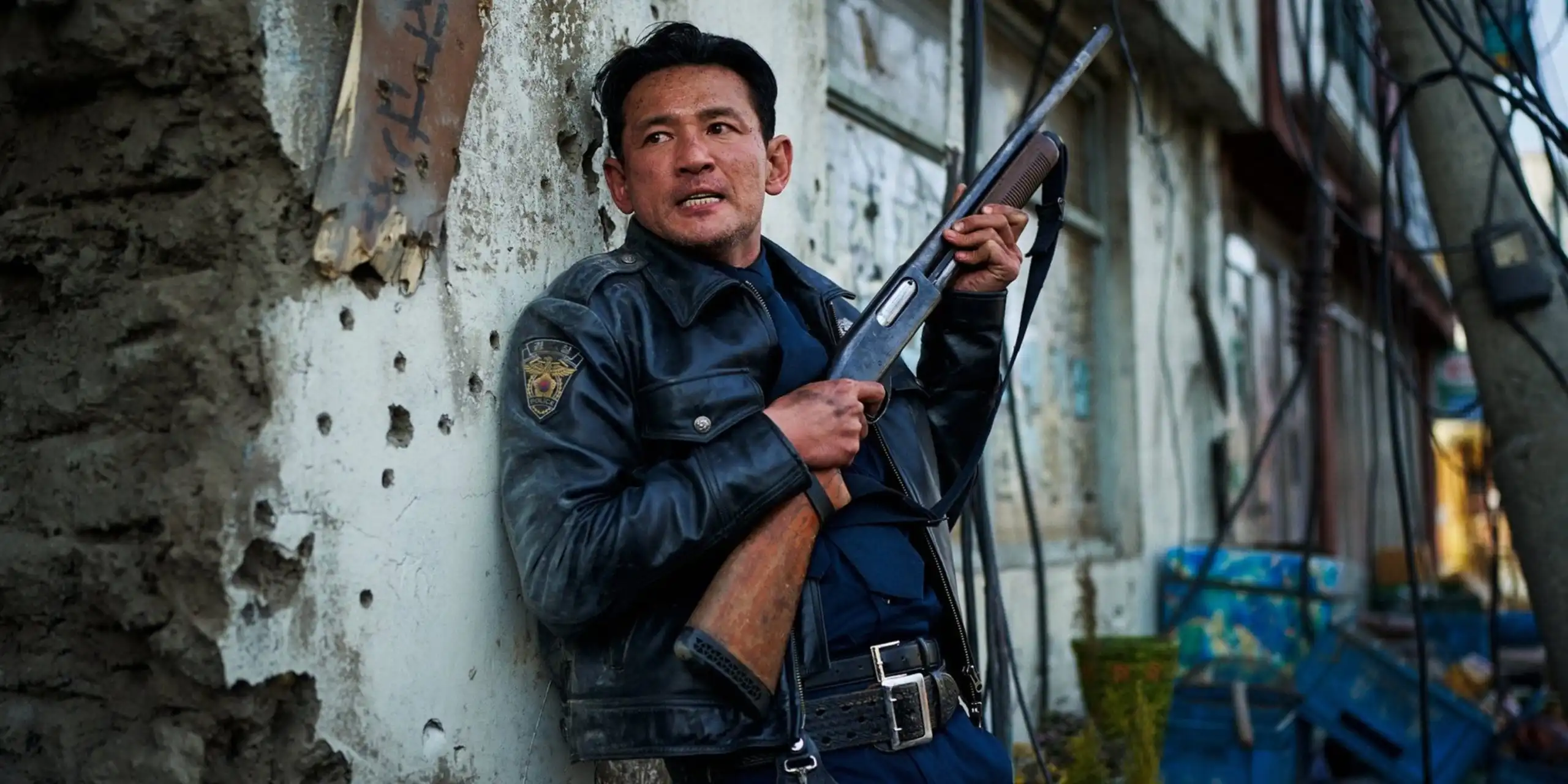
When watching One Battle After Another — Paul Thomas Anderson’s latest ambitious film starring Leonardo DiCaprio — a curious ear might catch a fleeting reference to “the Philippines.” I had this exact impression: did I mishear it? In this review / analytical piece, I dig into that question and also offer a broader critique of the film: its themes, performances, and whether such a mention (if present) is meaningful.
Premise & Context: What One Battle After Another Is About
First, to ground the discussion, here’s what One Battle After Another is. Based loosely on Thomas Pynchon’s novel Vineland and filtered through Anderson’s sensibility, the film follows Bob Ferguson (DiCaprio), a former revolutionary turned reclusive father, as he attempts to rescue his daughter from a corrupt antagonist whose past collides with his own. AP News+2Wikipedia+2
The film deals heavily in political ambiguity, chaos, identity, and how ideology takes root and then decays. DiCaprio himself describes it as holding up a mirror to society, exploring extremes from both ends of the spectrum. AP News+1
Critics have generally praised its risk-taking, scale, and emotional weight, while also warning it can be dense or overextended. People.com+2Reuters+2
So, within that tapestry of radicalism, memory, and global intrigue, could a passing reference to the Philippines slip in naturally? Let’s parse the evidence.
The Philippines Mention: What We Know (and Don’t Know)
1. Reports & Local Media Claim
A Philippine news outlet (“Tribune”) published a short piece titled “Did Leonardo DiCaprio mention Philippines in new movie?” noting that a viewer thought they heard it, and tying it to Leo’s activism. Daily Tribune
But that article provides no direct clip, transcript, or timestamp. It is speculative. The writer states:
“I do not know if I misheard it, but Leonardo DiCaprio seems to mention the Philippines in One Battle After Another …” Daily Tribune
That’s interesting, but not conclusive. There is no corroboration from interviews, critics’ reviews, or script leaks indicating a distinct Philippines mention.
2. Interviews, Press, and DiCaprio Commentary
I reviewed published interviews and official press around One Battle After Another, including those from Rolling Stone Philippines, AP, Reuters, and others. None explicitly mention a line referencing the Philippines or a Filipino locale. People.com+5Rolling Stone PH+5AP News+5
For example, in the Rolling Stone Philippines interview, DiCaprio discusses his motivation and character, but no mention arises of the Philippines or any dialogue about it. Rolling Stone PH
In the AP coverage of the film’s thematic profile, the major topics are extremism, immigration, corruption, and political collapse—but again, no explicit mention of the Philippines. AP News
In promotional materials or discussions about the film’s script, no transcript includes a Philippines reference (in the sources I could find).
3. Film Localization & Screening in the Philippines
It’s notable that One Battle After Another is being screened in the Philippines (released September 24 in PH theaters) and has drawn media attention locally. Rolling Stone PH+1
That local enthusiasm might make viewers more alert to hearing words that echo national identity. Sometimes, expectations or audience desire can lead to overinterpretation (i.e. hearing what one wants to hear).
4. Possibility of mishearing or stylistic reference
Given the film’s political and global dimension, it’s not implausible that the dialogue might include references to real-world places, nations, or geopolitical concerns. But even within dense political or revolutionary dialogue, actual country names may be rare, especially if the story is meant to evoke universality or analogies rather than point at specific nations.
It’s also possible a name like “Philippines” is mistaken for something phonetically similar (e.g. “Philips,” “Phillipstown,” “the peninsula”) or misheard in an accent, muffled sound mix, or overlapping background noise.
So far, I believe the evidence leans toward no confirmed, reliably documented mention of the Philippines in the official sources.
Review & Analysis: One Battle After Another
While the question of the Philippines reference is intriguing, let’s also treat this as a film review — because the movie itself demands that.
A. Tone and Style
Paul Thomas Anderson is known for creating dense, emotionally and socially ambitious films that reward patience and deep attention. One Battle After Another is no exception. There are moments of kinetic action, but much of the film thrives in undercurrents, metaphor, and political critique. People.com+3AP News+3Rolling Stone PH+3
The pacing is deliberate. The film often shifts from visceral set pieces to quieter interludes. This gives the audience time to reflect on character motivations, ideological blind spots, and the tension between radicalism and familial bonds.
Visually, Anderson (alongside cinematographer Michael Bauman) employs strong framing, use of VistaVision (a high-resolution, large-format film process) to accentuate scale and texture, and bold choices in lighting and composition to emphasize psychological weight. Wikipedia+2AP News+2
B. Performances & Chemistry
Leonardo DiCaprio as Bob Ferguson is compelling. He balances rage, paranoia, vulnerability, and paternal desperation. His history of complex roles adds weight here: he’s a man haunted by his younger self, trying to reconcile idealism with disillusionment. Reuters+3Rolling Stone PH+3AP News+3
Co-stars also shine. Benicio del Toro plays Sensei Sergio St. Carlos (a character combining martial arts, underground migrant rescue, and philosophical leanings). Dal Toro frames his scenes with restraint and gravitas that pair well against DiCaprio’s fire. Reuters+4EW.com+4AP News+4
Teyana Taylor, Regina Hall, and Chase Infiniti (the daughter Willa) give layered support, with Willa’s arc in particular grounding the narrative emotionally. AP News+2Rolling Stone PH+2
Sean Penn’s antagonist, Colonel Steven Lockjaw, is menacing but not cartoonish. He carries ideological conviction as well as brutality, making the conflict personal rather than purely symbolic. People.com+3AP News+3Reuters+3
C. Themes & Ambition
One of the film’s strengths is its refusal to be didactic. It doesn’t simply endorse one ideology over another. Rather, it interrogates how movements, idealism, and radicalism mutate over time, how power corrupts ideals, and how individuals can betray their own ethics. Wikipedia+4AP News+4Reuters+4
The father-daughter dynamic is also central: Willa is the inheritor of Bob’s past, and her journey ties the political to the personal. In a sense, the film asks: what responsibility do parents bear for the sins of their youth? And what does it mean to fight for causes when your own life is marked by regret and internal contradictions?
Political dissent, immigration, surveillance, identity, and rebellion pop up in the film’s fabric. There’s commentary on how systems attempt to absorb or crush dissent, on how propaganda and media filter narrative, and on how fear shapes human behavior. AP News+2Reuters+2
However, the very ambition of One Battle After Another can also be its weakness. Some audience members may find the pacing slow, the ideological imagery heavy, or the transitions jarring. The film doesn’t shy from complexity and occasionally expects the viewer to fill in gaps. Critics have noted that occasionally its reach could outstrip its coherence. People.com+1
D. Does the (Possible) Philippines Reference Matter?
Returning to your original question: if Leonardo DiCaprio did mention the Philippines (or if someone heard that), why would that matter?
- Symbolic resonance: The Philippines has its own history of colonialism, rebellion, social upheaval, martial law, insurgency, corruption, and activism. If the film had indeed slipped in such a mention, the filmmakers might be weaving in echoes of global struggle, suggesting that the film’s themes aren’t just American but transnational.
- Audience connection: For Filipino viewers, hearing “the Philippines” could feel like a welcome acknowledgment. It would give a sense of inclusion in the film’s geopolitical imagination. That partly explains why local media flagged it. Daily Tribune+1
- Misinterpretation risk: But if the mention is misheard or imagined, then it becomes more about how audiences interpret what they see and hear—and less about what the film actually says. In political cinema, spectators often “read in” references based on their own contexts.
If there is indeed a scripted line referencing “the Philippines,” it hasn’t been highlighted in mainstream coverage or press so far. Thus, it may be minor, buried, or ambiguous. As a viewer, you certainly have the right to bring up what you heard. But as a critic or reporter, I must remain cautious about elevating unverified claims.
Verdict & Recommendation
One Battle After Another is an ambitious, emotionally complex film that pushes boundaries and expects viewers to stay attentive. Its strengths lie in its performances, thematic weight, and refusal to lean easy. At times it teeters under its own ambition, but that is often the nature of films that aim to provoke, not simply entertain.
As for the Philippines mention: I could not find a reliable source or official confirmation that Leonardo DiCaprio does, in fact, say “the Philippines” (or reference it explicitly) in the film. It remains possible, but unverified. If you catch the exact moment (time stamp, context, audible line), that would help settle the question.
If I were to advise readers: go see the film with an open mind, possibly take notes, and listen deeply—especially in scenes of radical rhetoric or global references. If you did hear “the Philippines,” you’re not imagining significance—even if the film didn’t intend it, your interpretation is part of the viewing experience.