Celebrity publicity used to be a carefully planned machine. A new movie meant a press tour. A television premiere meant late-night appearances, magazine interviews, red carpets and carefully scheduled photo opportunities. Musicians would appear on radio shows, actors would sit down for long interviews and celebrities would spend days moving from one media outlet to another, repeating the same stories to increasingly different audiences. The goal was simple: keep the celebrity and the project in front of people long enough for the public to pay attention. But the internet has completely changed that equation. Today, a celebrity does not necessarily need a press tour to create a major moment. Sometimes all it takes is one photograph, one appearance, one sentence or one unexpected interaction for the internet to turn it into a conversation that reaches millions of people within hours.
That does not mean traditional publicity has disappeared. Hollywood still relies on premieres, interviews, promotional appearances and major entertainment events. But celebrity culture now has another, much faster system operating alongside it. A moment can escape the original context almost immediately and become something much larger. A celebrity attending Fashion Week might generate more discussion from a single outfit than from an entire week of scheduled interviews. An actor making an offhand comment during a podcast can suddenly become the subject of headlines. A musician photographed somewhere unexpected can inspire speculation before anyone has officially announced what they are doing. The internet has turned the celebrity moment itself into a form of publicity.
That shift has changed what audiences expect from famous people. Fans are no longer waiting for a magazine profile to learn what a celebrity is wearing, where they are going or what they think about something. They can see it almost instantly. Social platforms have created an environment where celebrity news is constantly moving, and entertainment stories can quickly cross into fashion, lifestyle, memes, fan communities and mainstream news. What begins as a photograph can become a debate. What begins as a short video can become a trend. What begins as an ordinary interview answer can become a headline that follows a celebrity for days.
The most fascinating part is that many of these moments are not necessarily planned to become major events. That is what makes them feel so powerful. A traditional press tour is designed around a schedule. Everyone knows the celebrity is going to appear on a particular program or attend a particular premiere because the entire event has been organized to create publicity. An unexpected celebrity moment feels different because audiences believe they are seeing something that was not necessarily designed for them. Whether that perception is always accurate is another question, but the feeling of spontaneity is incredibly valuable in the modern attention economy.
A celebrity walking into a restaurant, arriving at an airport, sitting courtside at a sporting event or attending a fashion show can become news almost instantly. The moment may have nothing to do with a new movie or album, yet it can generate enough attention to become its own story. This is especially true when the celebrity is photographed alongside another recognizable person. Suddenly, the internet wants to know who they were with, why they were together, what they were wearing, where they were going and whether there is a larger story behind the appearance.
That is how celebrity culture has become less dependent on traditional entertainment journalism. The audience itself has become part of the news cycle. Fans share photographs, create edits, post reactions, compare outfits, debate body language and build theories around tiny details. Entertainment accounts then pick up those conversations, mainstream publications report on them and the original moment becomes much larger than it was when the photograph was first taken.
The Internet Doesn’t Wait For The Press Release
This speed has created an entirely different kind of celebrity publicity. In the past, a publicist could carefully control when information reached the public. Today, that control is much harder to maintain. A photograph can appear online before a studio has announced a project. A fan can record a celebrity appearance before an official photographer has released images. A short clip can reveal something that was never intended to become the main story. And once the internet becomes interested, trying to slow the conversation down can be almost impossible.
That does not mean every viral moment becomes genuinely important. The internet moves quickly, and celebrity culture is full of stories that are enormous for twenty-four hours and almost completely forgotten a week later. But that temporary attention can still have real value. A celebrity can become more visible, a fashion brand can receive enormous exposure, a film can suddenly return to public conversation or an upcoming project can gain interest without the traditional machinery of promotion doing all the work.
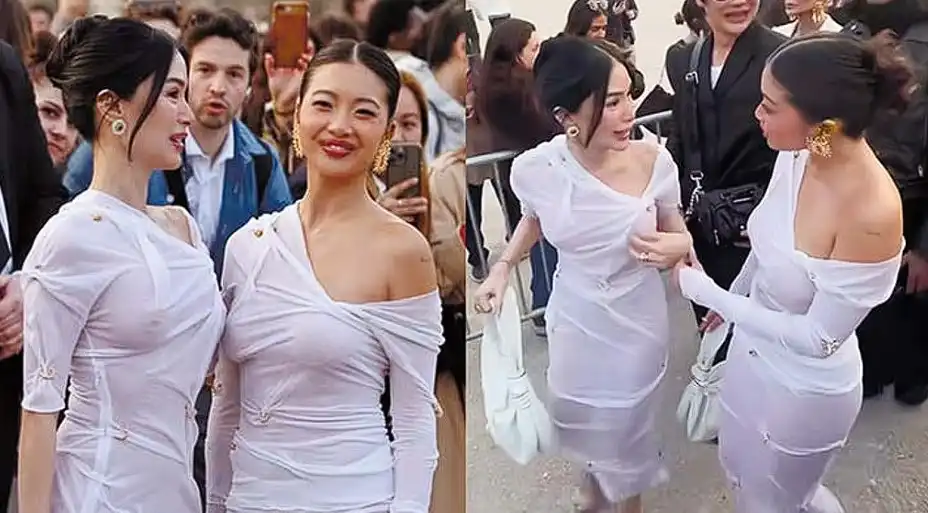
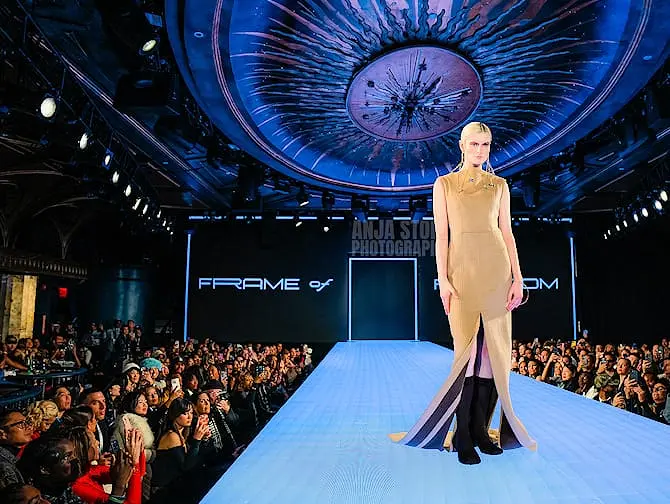
Fashion has become one of the clearest examples of this change. New York Fashion Week, for instance, is no longer simply about the collections presented by designers. The celebrities attending those shows can become part of the entertainment story themselves. A front-row appearance can generate photographs, social posts, fashion articles and fan reactions before the show itself has even finished. The celebrity may have attended for only a few hours, but the images can continue circulating long after the runway has been cleared.
The same thing happens on red carpets. A celebrity does not need to give a ten-minute interview to become part of the conversation. Sometimes the dress is enough. A dramatic silhouette, an unexpected designer, a major hairstyle change or a surprising pairing can dominate social media. Fans do not necessarily need additional information to begin talking. The image itself becomes the story.
This has also made celebrity style more important than ever. Clothing can communicate a message without a celebrity saying anything. A new haircut can suggest a transformation. A different fashion direction can signal a new era. A simple outfit can become notable because it contrasts with what a celebrity usually wears. Even a casual street-style photograph can generate the kind of coverage that once required a carefully arranged magazine shoot.
Celebrity interviews have changed in a similar way. Long-form conversations remain popular, but audiences increasingly respond to individual moments rather than entire interviews. A single answer can be clipped, reposted and discussed without the surrounding conversation. That creates both opportunity and risk. A celebrity may spend an hour explaining their perspective, but the internet may decide that one sentence is the part worth remembering.
This is one reason celebrities and their teams have become increasingly aware of the power of short-form content. A thirty-second clip can reach an enormous audience without requiring someone to watch the full interview. A single quote can become a meme. A reaction can become a GIF. A funny exchange can travel far beyond the original audience.
The result is a strange reversal in celebrity publicity. Instead of the entire interview driving the story, the story can now drive people back toward the interview.
A viral moment becomes the trailer for the larger conversation.
That has created a new kind of celebrity economy where attention does not always need to be purchased through traditional promotional campaigns. A celebrity who generates strong organic conversation can become part of the news cycle simply by appearing somewhere interesting. The moment does not have to be officially announced. It only needs to be interesting enough for people to share.
Of course, there is a downside to this speed. The same system that can create positive attention can also create misunderstandings. A photograph can be interpreted without context. A short video can remove everything that happened before or after a moment. A joke can be reposted without the tone that originally surrounded it. A celebrity can wake up to find that millions of people are discussing something they thought was completely insignificant.
That is the difficult reality of modern celebrity culture. Visibility is no longer something that only happens when you want it to.
A celebrity can become news simply by being seen.
That is particularly true for stars with large online fan bases. Their audiences are already organized and ready to respond. A new photo does not have to travel from a magazine to a reader. It can move directly from a phone camera to a fan account, from a fan account to thousands of reposts and from there into mainstream entertainment coverage. The distance between the original moment and the public reaction has almost disappeared.
This has created a fascinating relationship between celebrities and their audiences. Fans are no longer simply consumers of celebrity news. They are participants in its distribution. They decide which photographs receive attention, which quotes become memorable and which moments deserve another look. In many cases, the audience determines the significance of the moment before entertainment editors do.
That does not mean audiences are always right. Viral conversations can be inaccurate, exaggerated or based entirely on speculation. But the fact that people are talking can itself become newsworthy. Attention has become part of the story.
For celebrities, this can be incredibly useful. A star with a new project does not necessarily have to spend every day promoting it if audiences are already discussing them. A single viral appearance can remind people that a project exists. A fashion moment can put a celebrity back into the cultural conversation. An unexpected interview clip can introduce the personality of a celebrity to people who may not have followed their work closely before.
The celebrity moment has therefore become a kind of modern press tour in miniature. Instead of spending several weeks appearing everywhere, a celebrity may generate one or two moments that travel everywhere.
And sometimes, that is enough.
The irony is that the most effective moments often feel the least promotional. Audiences have become extremely good at recognizing obvious advertising. They know when a celebrity is appearing somewhere because a studio wants them to promote a film. They know when an interview is timed around an album release. They understand how publicity works. What they respond to most strongly is often the moment that feels like it exists outside the promotional machine.
That might be why candid photographs, unexpected interviews and spontaneous interactions can attract so much attention. They feel less like advertising and more like access.
Celebrity culture has always been built around the illusion of access. Fans want to feel as though they are getting a glimpse into the lives of people they normally only see on screens. Social media has made that illusion much more immediate. A celebrity can post directly to millions of followers, while fans can also capture and distribute moments themselves.
The boundary between official celebrity content and audience-created celebrity content has become increasingly difficult to define.
And that may be the biggest change of all.
Hollywood no longer controls the entire conversation about its stars.
The audience does.
That is why a single appearance can now become more powerful than an entire promotional campaign. The moment does not have to be carefully packaged before it reaches the public. It can be photographed, discussed, interpreted and transformed in real time.
A celebrity walking into a fashion show can become a fashion story. A celebrity attending a basketball game can become a sports-and-entertainment story. A celebrity making a joke can become a cultural debate. A celebrity appearing with an old friend can become a relationship rumor. A celebrity changing their hairstyle can suddenly become a beauty trend.
The categories have blurred.
Entertainment is no longer living in its own section of the internet.
Celebrity culture has spilled into everything.
Fashion, beauty, sports, food, travel, social media, television and even ordinary daily life can become part of the celebrity news cycle. That is why the modern celebrity moment does not need a traditional press tour anymore. The internet has effectively turned everyday visibility into a promotional ecosystem of its own.
There will always be major premieres, magazine covers and carefully planned interviews. Those formats are not disappearing. But they are no longer the only way celebrities can command attention. Sometimes the biggest moment is the one nobody planned as the main event.
A photograph taken outside a restaurant can become more discussed than a scheduled interview. A twenty-second video can reach more people than a television appearance. A single outfit can create more headlines than an entire red carpet.
The celebrity moment has become smaller, faster and much harder to predict.
And that unpredictability is exactly what keeps people watching.
Because in the current entertainment culture, nobody really knows which moment will become the next big story until the internet decides.
References
Pew Research Center — Social Media and News Consumption
Reuters Institute — Digital News Report