The dust from Weekend One of Coachella 2026 is still swirling, but the internet has already found its most polarizing figure: Justin Bieber. After years away from the spotlight following health challenges, Bieber’s Saturday night headlining set was billed as the ultimate comeback. But instead of the high-octane pop spectacle many expected, he delivered something much more unexpected. Within seconds of the lights going down, social media was split. We are currently witnessing a massive debate over whether Bieber is a reinvented genius or if he completely missed the festival vibe.
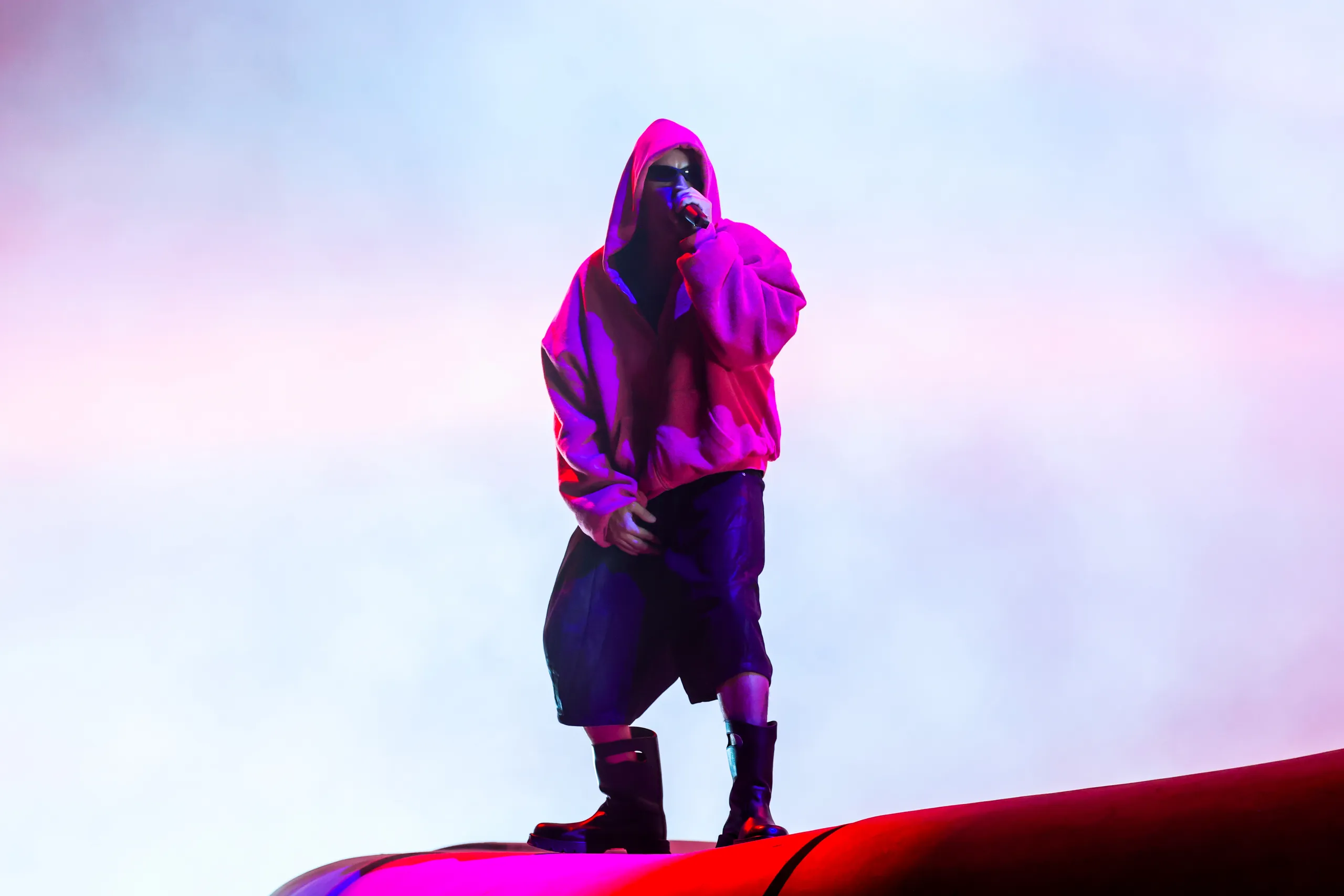
The fans who are calling the performance a “genius move” point to Bieber’s raw, stripped-down approach. In a festival world dominated by massive LED screens and complex choreography, Justin stood largely alone on a sparse stage. He focused heavily on his recent, more introspective albums, Swag and Swag II, leaning into mid-tempo tracks and acoustic moments. For these supporters, it was an act of bravery. They argue that he didn’t need the “distractions” of pyrotechnics because his vocals—which were noticeably strong and soulful—carried the weight of the show. To them, this was an intimate “club vibe” brought to a massive stage, showing a mature artist who no longer feels the need to hide behind big production.
However, the other side of the internet is not as convinced. Many casual fans and festival-goers felt the set was “chaotic” and mismatched for a Saturday night headliner slot. On TikTok and X, critics are calling the production lazy, with some even joking that his segment singing along to old music videos felt like “YouTube karaoke.” Compared to the high-energy, theatrical “Sabrinawood” set from Sabrina Carpenter the night before, Bieber’s performance felt quiet. For those who paid thousands of dollars to dance and sing along to hits, the deep cuts and slow ballads were a disappointment, leading to noticeable groups of people heading for the exits before he even finished.
This divide is exactly what makes Coachella 2026 so fascinating. It highlights the tension between “artistic growth” and “festival expectations.” Bieber chose to prioritize his current creative self over the easy crowd-pleasers, a move that is always going to be divisive. He did bring out guests like Wizkid and The Kid Laroi to inject some energy, but the core of the show remained stubbornly low-key. Whether you loved the intimacy or hated the lack of “showmanship,” you couldn’t look away.
In the 2026 attention economy, being “polarizing” is often better than being “perfect.” Every heated argument in the group chat and every viral “fail” or “win” video keeps Bieber at the center of the cultural conversation. He didn’t just play a concert; he started a debate that will likely last until he returns for Weekend Two.
As we look at the fallout from the set, it’s clear that Justin Bieber isn’t interested in the old rules of pop stardom anymore. He gave the desert a piece of his real life—quiet, raw, and sometimes awkward—and let the internet fight over what it meant. In an era of hyper-polished content, maybe that level of “chaos” is exactly what a real comeback looks like. Love it or hate it, Bieberchella is all anyone can talk about.