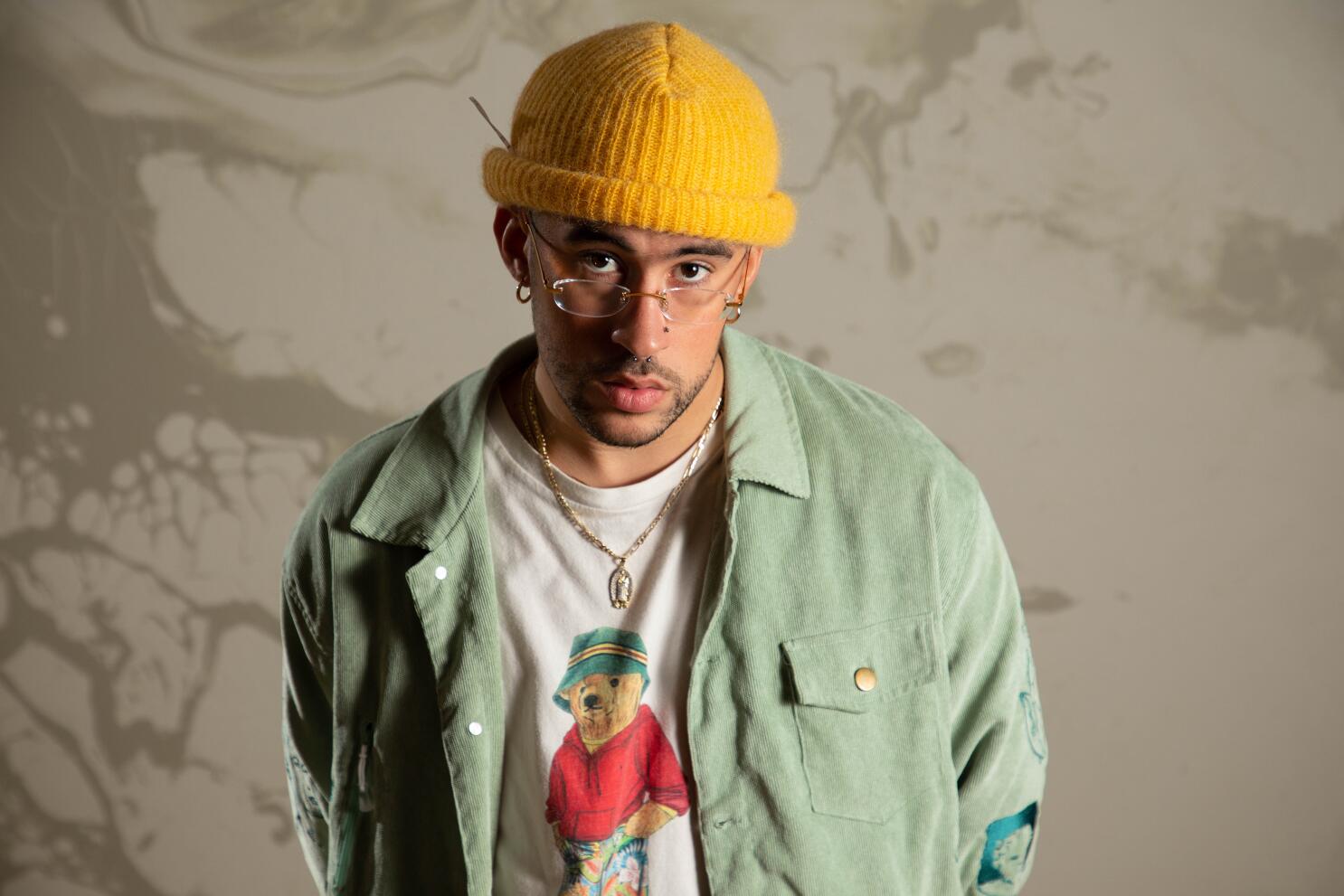
Silence has become one of the loudest forms of celebrity communication—and few recent examples prove that better than Bad Bunny. After months of political backlash tied to his historic Super Bowl LX Halftime Show performance, his decision to stay relatively quiet has only intensified the conversation around him. Instead of calming the noise, his absence from the discourse has created a vacuum—one that fans, critics, media outlets, and political commentators have rushed to fill.
The backlash itself was never just about music. Bad Bunny’s halftime show was a landmark cultural moment: he became the first solo Latino artist to headline the NFL’s biggest stage, delivering a performance centered on Puerto Rican identity, Spanish-language music, and pan-American unity. For millions of viewers, it was a powerful celebration of representation. For critics—particularly conservative commentators—it became a flashpoint in larger debates around language, immigration, and who gets to define “mainstream” American culture.
What makes the current moment so fascinating is how his silence has amplified every side of the story. In the age of instant reaction, audiences are conditioned to expect statements, clarifications, apologies, or explanations. Celebrities are often pressured to respond quickly, not just to controversies but to public opinion itself. When someone as globally visible as Bad Bunny chooses not to engage, that silence is interpreted in dozens of ways: confidence, defiance, exhaustion, strategy, or even indifference. The lack of explanation becomes its own narrative.
This dynamic says as much about internet culture as it does about the artist. Social media has created an ecosystem where attention moves faster than facts, and speculation often travels farther than statements. A pause in communication is rarely treated as neutrality; instead, it invites interpretation. Fans project meaning onto every absence, every delayed post, every unaddressed headline. Critics read silence as guilt. Supporters read it as restraint. The machine keeps moving either way.
For Bad Bunny, silence may also be a refusal to play by a system that increasingly demands constant accessibility. Part of his cultural power has always come from doing things on his own terms—whether that means challenging genre boundaries, centering Puerto Rican identity in global pop, or resisting expectations around language and image. Choosing not to immediately explain himself fits within that broader pattern. Rather than feeding the cycle, silence can function as control: a way of refusing to let controversy dictate timing, tone, or narrative.
There’s also a deeper reason silence lands differently when it comes from someone like him. Bad Bunny is not just a musician; he is a cultural symbol. His career has consistently intersected with conversations about identity, masculinity, politics, and Latin visibility. That means every public moment—especially one as high-profile as the Super Bowl—carries symbolic weight beyond entertainment. When he goes quiet, people are not just waiting for a celebrity update; they are waiting for a signal about what the moment means.
But silence can also be strategic in a more practical sense. In today’s media cycle, responding too quickly often prolongs controversy rather than resolves it. Public statements can be dissected, memed, politicized, and repurposed within minutes. By saying less, some public figures avoid escalating narratives that are designed to feed on reaction. In that sense, going quiet may not be retreat—it may be a way of preserving control in a landscape that rewards outrage over nuance.
What’s clear is that the noise surrounding Bad Bunny is about more than one performance or one moment of backlash. It reflects a broader truth about celebrity in 2026: visibility now comes with an expectation of perpetual response. Public figures are no longer judged only by what they create, but by how often they explain themselves. Silence, once seen as avoidance, now carries its own power—and its own consequences.
That’s why his quiet made everything louder. In refusing to immediately enter the discourse, Bad Bunny turned the spotlight back on the culture reacting to him. The speculation, the think pieces, the online debates—they reveal just how uncomfortable the public has become with ambiguity. We are used to instant access, instant commentary, instant closure. Silence interrupts that rhythm. It forces people to sit with uncertainty, and in a culture built on constant noise, that can feel deafening.
In the end, the real story may not be that Bad Bunny went quiet. It’s that everyone else got louder trying to explain what his silence meant.