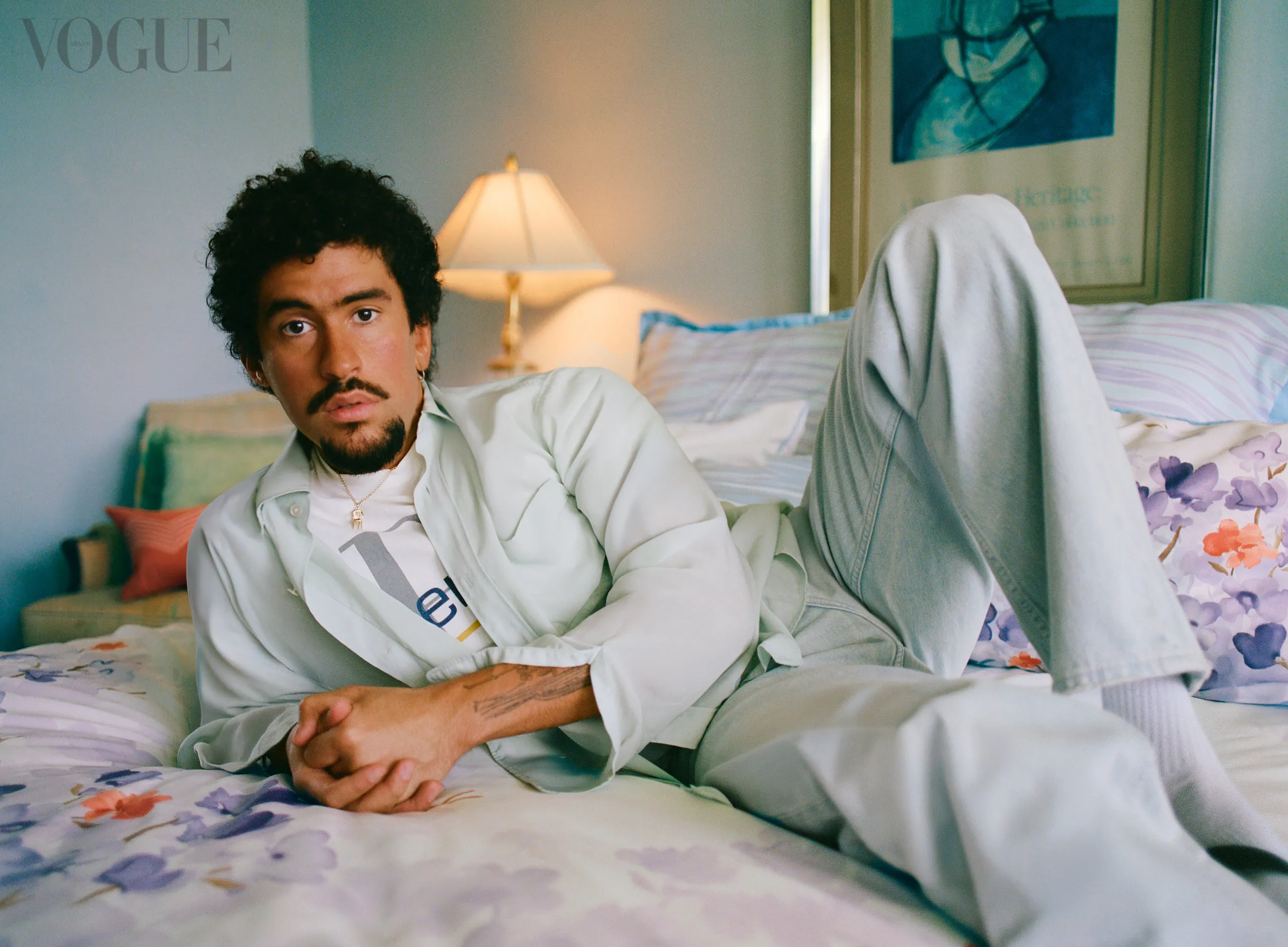
When Bad Bunny stepped onto the stage at the Super Bowl LX Halftime Show, it was already destined to be a major cultural event. What no one could fully predict, however, was how that single performance—followed by his sudden Instagram disappearance—would go on to dominate the entire news cycle for days, even weeks.
This is the power of a modern celebrity moment.
It’s no longer just about what happens in the spotlight. It’s about how quickly that moment spreads, how intensely it is debated, and how effectively it evolves into something bigger than the original event. In today’s media landscape, one action—one performance, one post, or even one silence—can ripple outward and take over the global conversation.
Bad Bunny’s recent moment is a perfect case study in how that process works.
The performance itself was the spark. As the first solo Latino artist to headline the Super Bowl halftime show, he delivered something that was both historic and culturally significant. Performing largely in Spanish, he challenged long-standing expectations of what a “mainstream” halftime show should look like. For many viewers, it was a powerful representation of Latin culture on one of the biggest stages in the world.
But moments like these rarely exist in a vacuum.
Within minutes of the performance ending, clips began circulating across platforms like TikTok, X, and Instagram. Fans shared their favorite parts. Critics highlighted what they didn’t like. Commentary poured in from all directions—music fans, cultural commentators, politicians, and people who don’t usually follow pop culture at all.
This is where the first transformation happens: a performance becomes content.
Once a moment is turned into bite-sized clips and reactions, it becomes infinitely shareable. People don’t need to watch the full show to form an opinion—they just need to see a 10-second clip paired with a strong take. That’s how narratives begin to form almost instantly.
And those narratives rarely agree.
Some viewers praised the performance as groundbreaking and long overdue. Others criticized it for being too political, too different, or simply not what they expected. The internet quickly split into opposing sides, each reinforcing its own perspective through reposts, commentary, and algorithm-driven feeds.
This division is not a side effect—it’s fuel.
Controversy keeps people engaged. It encourages responses, reactions, and rebuttals. Every disagreement generates more content, which generates more visibility, which keeps the story alive. A universally loved performance might trend for a day. A divisive one can dominate for a week or more.
But what turned this particular moment into a full-scale news cycle wasn’t just the performance—it was what happened next.
Bad Bunny deleted his Instagram presence.
No explanation. No statement. Just gone.
That single move added an entirely new layer to the story. Suddenly, the conversation wasn’t just about what he did on stage—it was about what he did afterward. Media outlets began asking new questions. Fans speculated about his motives. Critics interpreted the disappearance through their own lenses.
This is the second transformation: a moment becomes a mystery.
Mystery is one of the most powerful forces in media. When there’s no clear answer, people fill in the gaps themselves. They create theories, connect dots, and share interpretations. Each theory becomes its own mini-story, extending the life of the original event.
In traditional media cycles, stories often fade once all the facts are known. But in the age of social media, a lack of information can actually prolong attention. The absence of clarity keeps the conversation open-ended.
And in this case, the silence was especially loud.
Celebrities today are often expected to respond immediately to controversy. Statements are drafted, apologies are posted, clarifications are issued. When that doesn’t happen, it feels intentional—even if it isn’t.
Bad Bunny’s silence disrupted the expected pattern.
Instead of closing the narrative, he left it wide open.
That openness allowed different audiences to interpret the moment in completely different ways. Supporters framed his disappearance as artistic or strategic—a way to reset, to build anticipation, or to avoid feeding negativity. Critics saw it as avoidance or a refusal to engage with legitimate criticism.
Both interpretations gained traction. Both generated content. Both kept the story alive.
This is how a single moment expands into a full news cycle.
It moves through stages: event, reaction, division, escalation, and reinterpretation. Each stage adds new angles, new headlines, and new reasons for people to keep paying attention.
Another key factor is timing. The Super Bowl is already one of the most watched events in the world. Anything that happens during its halftime show is guaranteed massive visibility. But visibility alone isn’t enough to sustain a news cycle. What matters is what happens after the moment.
Bad Bunny’s Instagram disappearance ensured that the story didn’t end when the show did.
It created a second wave of attention.
Media outlets that had already covered the performance now had a new angle to explore. Social media users who had already shared their opinions now had something new to react to. Even people who hadn’t watched the halftime show became aware of the story through headlines about his disappearance.
The moment expanded beyond its original audience.
This is another defining feature of modern celebrity culture: crossover reach. A story doesn’t stay within its original domain. A music performance becomes a cultural debate. A social media action becomes a news headline. A personal decision becomes a public conversation.
Everything is interconnected.
And because everything is interconnected, a single moment can travel farther than ever before.
There’s also a psychological element at play. People are naturally drawn to stories that feel unresolved. A clear beginning, middle, and end is satisfying—but it doesn’t always keep attention. An open-ended story, on the other hand, invites ongoing engagement.
Bad Bunny’s situation remains unresolved.
Why did he delete his Instagram? Was it planned? Was it emotional? Was it part of a larger strategy?
No one knows for sure.
And that uncertainty is what keeps people talking.
It’s also what keeps the story relevant in a fast-moving media environment. Every new development—whether it’s a brief return to Instagram, a rumored project, or a public appearance—gets interpreted through the lens of the original moment.
The narrative keeps evolving.
In many ways, this reflects a broader shift in how news cycles operate. They are no longer linear. They are layered, recursive, and constantly being reshaped by new information and interpretations.
A single moment doesn’t just happen—it continues to happen.
It gets revisited, reframed, and reanalyzed over time.
Bad Bunny’s case also highlights the growing importance of control in celebrity culture. Social media has given artists direct access to their audiences, but it has also created expectations of constant engagement. By stepping away, even temporarily, he disrupted that expectation.
He controlled the pace of the narrative by refusing to participate in it directly.
That kind of control is rare, and it’s part of what makes the moment so compelling. It suggests that in an age of constant visibility, absence can be just as powerful as presence.
It also raises questions about the future of celebrity communication. Will more artists adopt similar strategies? Will silence become a more common response to controversy? Will audiences continue to engage with stories that lack clear answers?
There are no definitive answers yet, but the trend is worth watching.
What is clear is that the mechanics of attention have changed. It’s no longer just about creating a moment—it’s about sustaining it. And sustaining a moment often requires more than just content. It requires narrative, tension, and sometimes, deliberate ambiguity.
Bad Bunny’s halftime performance was the catalyst.
His Instagram disappearance was the accelerant.
Together, they created a moment that didn’t just trend—it lingered, expanded, and dominated the conversation.
That’s the anatomy of a modern news cycle.
One moment becomes many. One story becomes multiple narratives. One action—on stage or off—becomes a global discussion.
And in a world where attention is constantly shifting, the ability to hold that attention—even through silence—is what truly defines influence.