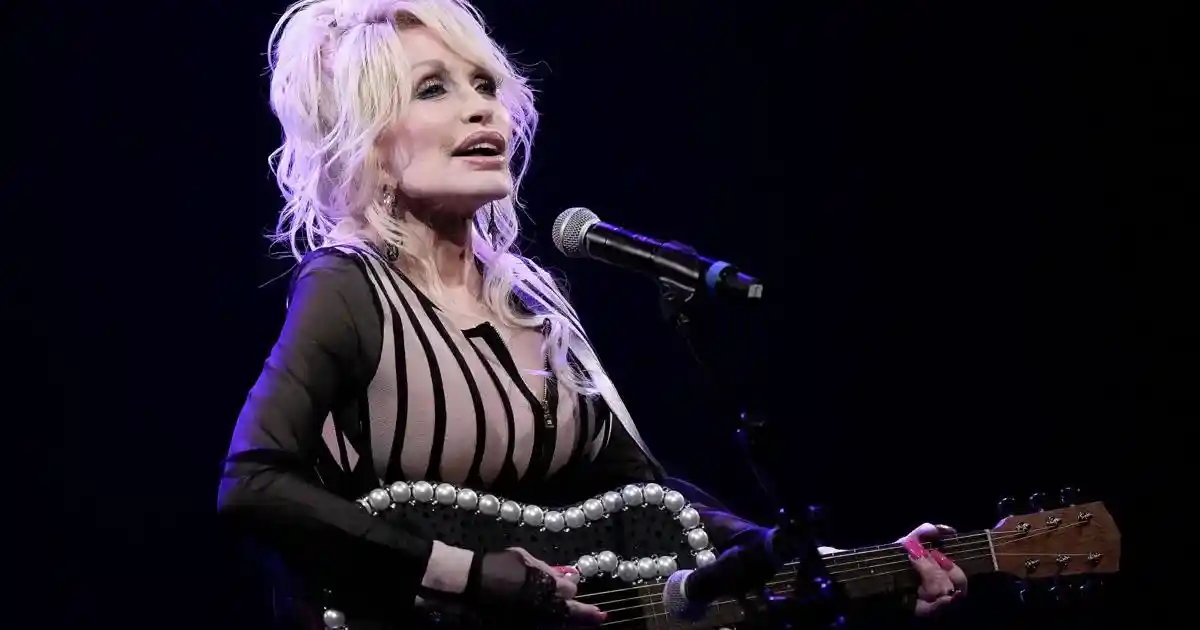
Dolly Parton’s music is reaching millions of listeners again in a powerful posthumous tribute to one of country music’s most beloved icons. Following Parton’s death on August 25, 2026, at the age of 80, fans around the world have returned to the songs that made her a global superstar, pushing her catalog to extraordinary streaming numbers.
The surge is more than a temporary spike in music consumption. It is a reflection of the remarkable connection Parton built with audiences throughout a career that stretched across more than six decades. From “Jolene” and “9 to 5” to “I Will Always Love You,” her songwriting has become part of popular culture far beyond the traditional boundaries of country music.
According to data from Luminate reported by the Associated Press, Parton’s U.S. audio and video streams jumped from approximately 1.2 million on August 24 to 30.5 million on the day of her death. By August 26, that figure had climbed again to 46.3 million. Worldwide, her audio and video streams increased by 1,549%, rising from about 2.5 million on August 24 to 41.8 million on August 25.
By August 26, Parton’s worldwide on-demand audio streams reached 79.7 million, making her the most-streamed artist globally that day.
For an artist whose career began long before the streaming era, the numbers offer a striking reminder that Dolly Parton’s music has not simply survived changing generations. It continues to find new listeners.
Dolly Parton’s Passing Leaves a Major Cultural Void
Parton’s death marked the end of an extraordinary life in music, entertainment, business, and philanthropy.
Her family announced her passing on August 25, with her nephew Bryan Seaver confirming the news. Her publicist later said Parton died following a brief battle with cancer.
The announcement immediately prompted an outpouring of tributes from fans, musicians, actors, public figures, and organizations around the world.
Parton was much more than a country singer. She was a songwriter, actress, author, entrepreneur, philanthropist, and cultural figure whose influence reached generations of people.
Her career included some of the most recognizable songs in American music, major movie roles, the creation of Dollywood, and the development of the Dolly Parton Imagination Library, which has provided hundreds of millions of books to children. She also became known for her generosity toward medical research and disaster relief.
That broad cultural impact helps explain why her death has triggered such a strong reaction.
People are not simply streaming old songs because they remember Parton. They are returning to an enormous body of work that has remained relevant for decades.
“Jolene” Becomes a Major Part of the Streaming Surge
Among Parton’s many songs, “Jolene” has emerged as one of the biggest beneficiaries of the renewed attention.
The 1973 classic has long been one of her signature recordings, telling the story of a woman pleading with another woman not to take the man she loves. Its simple but emotionally intense narrative has made it one of the most recognizable songs in country music.
Following Parton’s death, its streaming numbers exploded.
In the United States, “Jolene” went from more than 196,000 streams on August 24 to approximately 3.3 million on August 25 and around 4 million on August 26.
The numbers demonstrate how quickly listeners responded to the news of Parton’s passing.
For longtime fans, streaming “Jolene” is a way to revisit an unforgettable song. For younger listeners who may have discovered Parton through social media, covers, television, movies, or contemporary artists, the renewed attention offers another opportunity to explore the original.
That is one of the most powerful aspects of streaming platforms. They allow older music to become new again.
“9 to 5” Finds a New Generation of Listeners
Another Dolly Parton classic experiencing a major increase is “9 to 5.”
Originally released in 1980 as part of the soundtrack to the comedy film of the same name, the song became an anthem about the frustrations of working life. Its upbeat production contrasted with lyrics about long hours, low control, and workplace inequality.
More than four decades later, the song remains instantly recognizable.
Following Parton’s death, U.S. streams of “9 to 5” rose from approximately 208,600 on August 24 to 3 million on August 25 and 3.6 million on August 26.
The renewed interest is significant because “9 to 5” demonstrates how Parton’s songwriting could cross generations and genres.
The song was not confined to country music audiences. It became part of film history, workplace culture, feminist conversations, and mainstream pop culture.
Its current streaming resurgence shows that the themes behind the song still connect with modern listeners.
“I Will Always Love You” Reminds the World of Parton’s Songwriting Genius
Perhaps no song better illustrates Dolly Parton’s songwriting legacy than “I Will Always Love You.”
Many listeners know Whitney Houston’s enormous 1992 version from The Bodyguard, but the song was originally written and recorded by Parton decades earlier.
Parton wrote the song in the early 1970s, and her original recording became an important part of her musical history. Houston later transformed it into one of the biggest pop ballads of all time.
After Parton’s death, the original recording experienced a significant streaming increase.
U.S. streams climbed from roughly 64,900 on August 24 to 2 million on August 25 and approximately 2.8 million on August 26.
The renewed interest in the song also serves as a reminder that Parton was not simply a performer.
She was an exceptional songwriter whose work could be interpreted by artists across different musical styles.
Her influence can be heard in country, pop, rock, gospel, and contemporary music, making her catalog unusually versatile.
“Islands in the Stream” Also Returns to the Spotlight
Parton’s collaboration with Kenny Rogers, “Islands in the Stream,” has also benefited from the posthumous streaming surge.
The song became one of the defining country-pop collaborations of the 1980s. Parton and Rogers’ chemistry helped transform it into a crossover success, and it remains one of the most beloved duets associated with either artist.
Following Parton’s death, U.S. streams increased from approximately 165,900 on August 24 to 2.1 million on August 25 and 2.9 million on August 26.
The renewed attention is especially poignant because both voices at the center of the recording now belong to artists who have passed away.
For fans, listening to “Islands in the Stream” can feel like revisiting an earlier period of country music when major artists could create crossover hits that became part of everyday popular culture.
The Streaming Boom Goes Beyond Her Biggest Hits
While “Jolene,” “9 to 5,” “I Will Always Love You,” and “Islands in the Stream” have received much of the attention, the streaming increase extends throughout Parton’s catalog.
Songs including “Here You Come Again,” “Coat of Many Colors,” “Why’d You Come in Here Lookin’ Like That?,” “There Was Jesus,” and “My Tennessee Mountain Home” also experienced major increases.
That broader surge is particularly significant.
It suggests that listeners are not simply playing the two or three songs they already know. Many are exploring deeper parts of Parton’s catalog.
For longtime fans, this may mean revisiting favorite albums. For younger audiences, it may mean discovering songs they had never heard before.
That is how an artist’s catalog can experience a second life.
Why Music Streaming Surges After an Artist’s Death
The phenomenon is not unique to Dolly Parton.
When a major artist dies, listeners often return to their music as a way of processing grief. Streaming services make this easier than ever because an artist’s entire catalog can be accessed instantly.
There is also a powerful curiosity factor.
News of a celebrity’s death introduces their work to people who may not have been familiar with it. Younger listeners may hear a song for the first time because it is suddenly appearing in social media posts, tribute videos, news reports, playlists, and conversations.
In Parton’s case, the effect is especially strong because her music has already been passed down through generations.
Her songs have appeared in movies, television programs, advertisements, covers, concerts, and viral online content. Her influence was already everywhere.
Her death simply brought that influence back into sharper focus.
Dolly Parton Was More Than Her Music
The streaming numbers are impressive, but they represent only one part of Parton’s legacy.
She became one of the most successful businesswomen in entertainment while maintaining an unusually approachable public persona.
Dollywood became one of Tennessee’s major tourist attractions, while her Imagination Library established a philanthropic legacy centered on children’s literacy. Parton also famously donated $1 million toward COVID-19 vaccine research at Vanderbilt University Medical Center.
Her philanthropic work was not a side project.
It became a defining part of her public identity.
That combination of entertainment success and generosity helped Parton appeal to people who might not have considered themselves country music fans.
She could be celebrated as a singer, songwriter, actress, businesswoman, philanthropist, and cultural icon all at once.
A Legacy That Crosses Generations
One of the most remarkable things about Dolly Parton’s career is the number of generations that have grown up with her music.
Older fans remember her early country recordings and television appearances. Another generation knows her from films such as 9 to 5 and Steel Magnolias. Younger listeners may have encountered her through streaming platforms, social media, collaborations, covers, or contemporary artists.
That cross-generational appeal is difficult to manufacture.
Parton developed it naturally through decades of consistent creativity.
Her songs also deal with emotions that do not become outdated: heartbreak, ambition, jealousy, family, hard work, faith, independence, and love.
Those themes help explain why a song recorded decades ago can suddenly feel relevant to someone hearing it for the first time today.
Dolly Parton’s Influence on Contemporary Artists
Parton’s influence has extended well beyond traditional country music.
Artists from different genres have covered her songs or cited her as an inspiration. Her songwriting has been particularly influential because she demonstrated that emotionally direct storytelling can work across musical boundaries.
Her ability to write songs that sound simple while carrying substantial emotional weight is one of her greatest strengths.
“Jolene,” for example, takes a straightforward plea and turns it into an unforgettable story. “Coat of Many Colors” transforms a childhood memory into a reflection on poverty, family, dignity, and love. “9 to 5” turns workplace frustration into an irresistibly catchy anthem.
These songs work because their stories are easy to understand but emotionally rich.
That is a songwriting skill that does not become outdated.
Her Music and Her Personality Were Closely Connected
Parton’s music has always been connected to her personality.
She was known for her humor, warmth, self-awareness, glamorous style, and willingness to make fun of herself. She could embrace rhinestones and big hair while also writing deeply emotional songs about hardship and family.
That combination made her unusual.
She never appeared interested in separating herself completely from the person she was outside the stage.
Her public persona was part of the appeal.
Fans felt as though they knew Dolly, even though they had never met her.
That sense of familiarity is one reason her death has generated such an emotional response.
Streaming Keeps Her Legacy Alive
The enormous streaming surge demonstrates one of the biggest changes in the music industry during Parton’s lifetime.
When she began recording music, listeners primarily depended on vinyl records, radio, and later cassette tapes and CDs. Today, nearly her entire catalog can be accessed within seconds.
That technological shift means Parton’s music can continue reaching audiences without the limitations of physical distribution.
A teenager discovering “Jolene” today does not need to find an old record or CD.
They can simply search for it.
That accessibility gives classic artists an opportunity to remain relevant in ways that previous generations could not have imagined.
For Parton, it means her music can continue finding listeners long after her final performance.
Her Legacy Is Bigger Than a Streaming Record
It would be easy to focus entirely on the numbers.
A 1,549% increase in worldwide audio and video streams is remarkable, while reaching 79.7 million global on-demand audio streams in a single day is an extraordinary posthumous milestone.
But the numbers tell only part of the story.
Every stream represents someone choosing to listen.
Some are longtime fans remembering where they were when they first heard a Parton song. Others may be discovering her music for the first time.
Some may be listening because they are grieving. Others may simply be curious about why the world is talking about Dolly Parton.
Regardless of the reason, they are returning to the music.
And that is perhaps the most meaningful measure of an artist’s legacy.
Dolly Parton’s Music Will Continue to Evolve With the Times
The posthumous streaming surge may eventually settle, but Parton’s music is unlikely to disappear from popular culture.
Her songs have already demonstrated remarkable staying power.
“Jolene” will continue to be covered. “9 to 5” will continue to appear in discussions about work and equality. “I Will Always Love You” will remain one of the great love songs in modern music. “Coat of Many Colors” will continue introducing new generations to Parton’s storytelling.
Her work has already survived changing musical trends, recording technologies, and generations of listeners.
There is little reason to believe that will change now.
Final Thoughts: A Songwriter Who Became Immortal Through Music
Dolly Parton’s death has left an enormous void in country music and popular culture, but the extraordinary reaction to her catalog demonstrates that her creative legacy remains very much alive.
Her music has experienced an unprecedented global streaming surge since her passing, with millions of listeners returning to songs that have defined generations. Luminate data shows that her worldwide audio and video streams jumped 1,549% on the day of her death, while her on-demand audio streams reached 79.7 million globally the following day.
The biggest songs, from “Jolene” and “9 to 5” to “I Will Always Love You” and “Islands in the Stream,” are once again dominating listening habits.
But perhaps the most important part of this story is not the streaming record.
It is the fact that people still want to hear Dolly Parton.
Decades after she first picked up a guitar and began writing songs, her music continues to speak to listeners who have never experienced the world in which many of those songs were created.
That is the rarest kind of celebrity legacy.
Dolly Parton may no longer be here to write another song, perform another concert, or make another joke, but her voice remains everywhere.
Every time someone presses play on “Jolene,” sings along to “9 to 5,” discovers “Coat of Many Colors,” or falls in love with “I Will Always Love You,” another piece of Parton’s remarkable legacy continues.
Her music did not disappear when she died.
It found millions of new reasons to be heard.